
CONSCIOUS TRAINING
The importance of rest in horse training
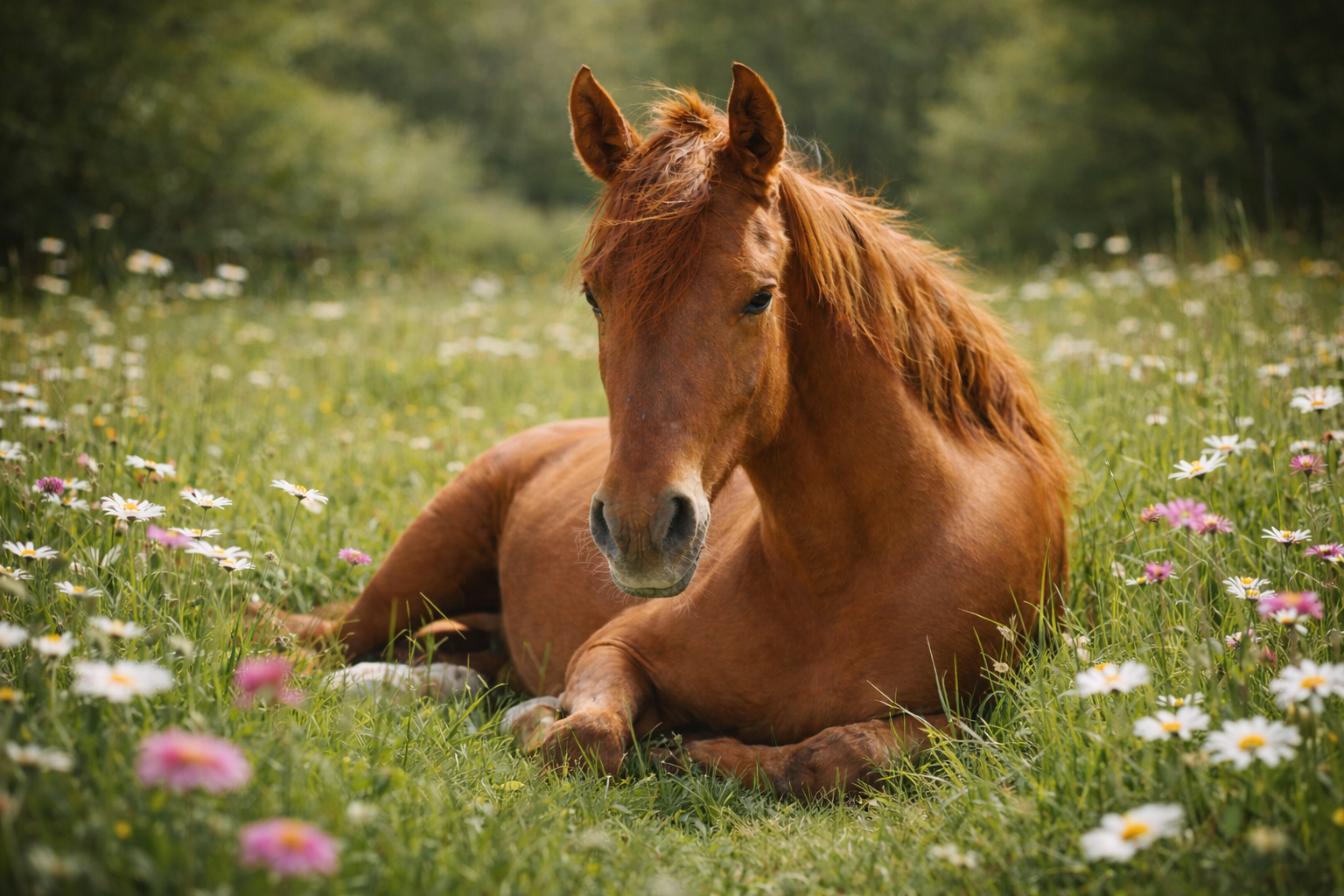
The body does not transform during work. It transforms during rest.
In a world where “doing more” often seems like the answer, rest is frequently seen as wasted time.
But for the horse —as for any athlete— rest is not the absence of work. It is part of training.
A muscle does not get stronger when we push it. It gets stronger when it recovers. And this is where many training plans fail.
In summary
- 🧠 Rest also trains the nervous system.
- 💪 Physical adaptation happens during recovery, not effort.
- ⚠️ Without release, the horse compensates (and compensation leads to injury).
- 🌿 Rest ≠ stopping: active recovery regulates and releases.
- ⏳ Planning rest improves wellbeing, performance and longevity.
What happens in the body during training
During work, the body receives necessary stimuli. But it also accumulates load.
- Muscle micro-tears (a normal part of adaptation).
- Metabolic fatigue (energy, hydration, reserves).
- Fascial tension (especially under stress or stiffness).
- Neuromotor reorganisation (coordination, balance, response).
If we don’t give the body time to reorganise, the horse begins to compensate.
And long-term compensation is often the beginning of injury.
Signs your horse needs more rest
Sometimes there is no clear lameness. But there are subtle signs.
- Gradual loss of impulsion.
- Initial stiffness that takes longer to release.
- Increased difficulty in exercises that were once easy.
- Less emotional expression during work (less presence, less “yes”).
It is not always a lack of willingness. Often, it is accumulation. Physical, mental, or both.
Rest does not mean complete inactivity
Resting is not about leaving the horse still for days. It is about allowing a different kind of movement, one that is softer and regenerative.
- Time in paddock or pasture (free movement and regulation).
- Relaxed walking sessions.
- Liberty work without pressure.
- Changing stimuli to release the mind.
The nervous system also needs recovery. A mentally saturated horse often expresses it physically.
How many rest days does a horse need?
It depends on many factors: age, training level, real workload, injury history and daily management.
As a practical guideline: a horse training 4–5 days per week usually needs at least 1–2 days of light or regenerative work.
And during more demanding periods, deload phases make a real difference.
Rest as a preventive tool
Well-planned rest reduces injury risk and improves the horse’s availability.
- Improves movement quality.
- Enhances learning capacity.
- Reduces tension and overload.
- Supports emotional balance.
A horse that rests well processes better.
And a horse that processes better, responds better.
Kine Equus conclusion
Coherence is not about doing more. It is about knowing when to stop.
The balance between stimulus and recovery is what builds a strong body… and an available mind.